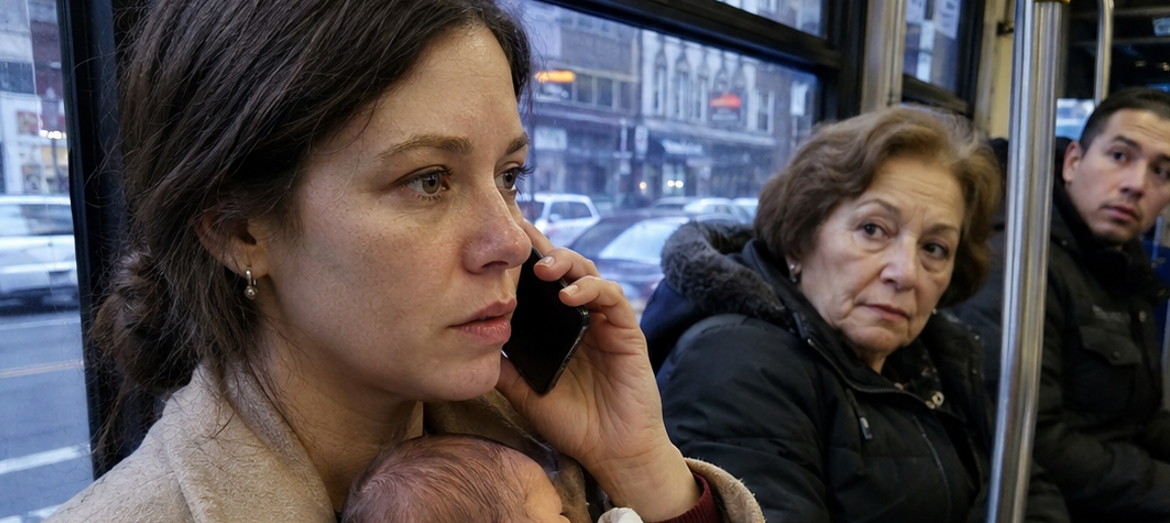
By the time Dominic finished lunch, my SUV was no longer in the restaurant parking lot.
I didn’t know that yet.
At that moment, I was sitting in the back of a black sedan with Leo asleep beside me in a properly secured infant seat while Manhattan moved past the tinted windows. For the first time since leaving the hospital, I could breathe without worrying about where the next bus stop was or whether I would be able to lift Leo’s carrier without tearing something inside me.
The woman in the dark suit sat in the front passenger seat. Her name was Elena Ortiz. She had introduced herself simply as “a family friend,” though the way she carried herself told me there was more to it. She didn’t ask questions. She handed me water. She adjusted the air-conditioning. When Leo stirred, she quietly asked whether I needed the car pulled over. That was all.
It was remarkable how powerful ordinary consideration could feel after spending years being told I was too sensitive whenever I asked for it.
My phone buzzed again. Dominic.
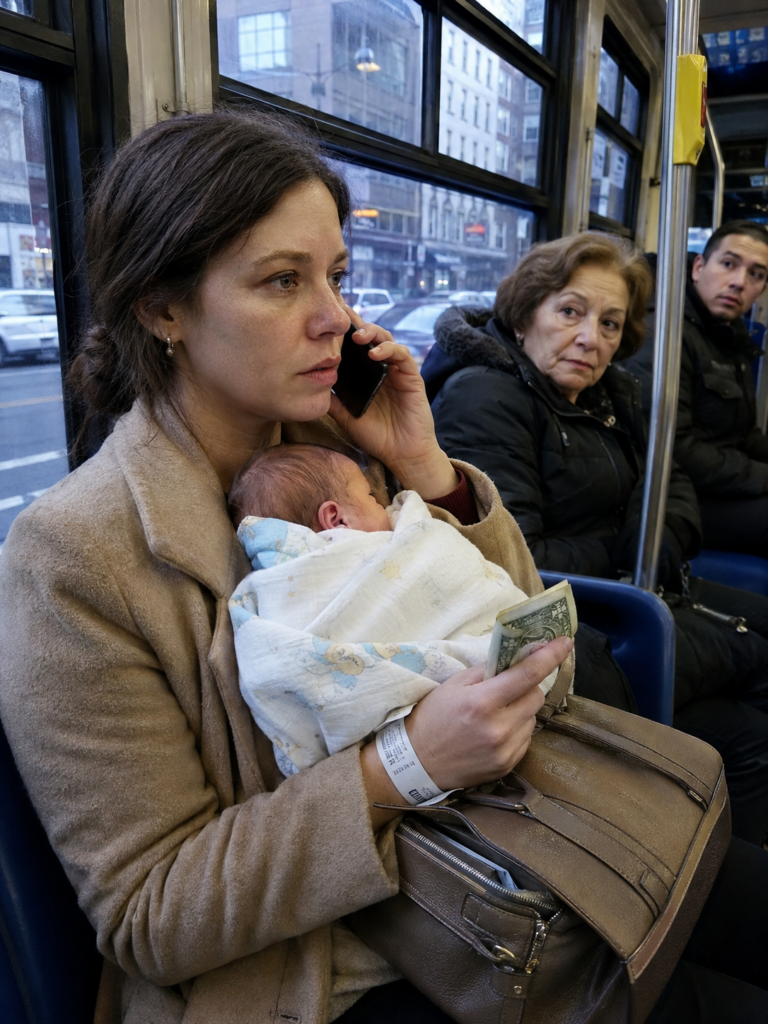
Where are you?
Then:
Did you stop somewhere?
A minute later:
Audrey, answer me.
I turned the phone facedown. Elena glanced at me through the rearview mirror.
“You don’t have to answer anything today.”
“I know.”
But knowing and believing were two different things. For six years, I had answered Dominic quickly because unanswered texts became questions later. Why hadn’t I responded? What had I been doing? Why was I making things complicated?
He rarely shouted. He didn’t need to. Dominic’s favorite weapon was certainty—the assumption that his version of events was the reasonable one and that eventually I would tire of defending my own. I had mistaken that confidence for strength when we first met. Now I wondered how often it had simply been entitlement dressed well.
The sedan turned east. I recognized the neighborhood.
“Where are we going?”
“To your father’s apartment.”
I sat straighter, then immediately regretted it when my incision pulled. “My father is in Washington.”
“He was.”
I stared at her. Elena’s expression remained professionally neutral. “He changed his schedule.”
Of course he had. That was Dad. He had missed birthdays because of deployments, Christmas dinners because crises did not consult calendars, and once my high school graduation because his aircraft had been redirected overseas. But when something truly mattered, he had a way of appearing with such complete focus that the rest of the world seemed temporarily dismissed.
Twenty minutes later, the car descended into the private garage beneath a quiet building overlooking the East River. Dad had owned the apartment for years, though he almost never used it. Growing up, I had thought of it as the place where he kept old books, military photographs, and suits he wore for events in New York. I hadn’t been there in almost two years.
Elena carried my diaper bag. The driver carried my hospital tote. I carried only Leo.
Dad was waiting when the elevator doors opened. For a second, neither of us moved. He was still in the dark blue suit he wore when traveling between official meetings, but his tie had been removed and one collar button was open.
To most people, General Charles Brooks was imposing even when he was silent. He was six-foot-two, silver-haired, straight-backed, and possessed the unnerving habit of looking at someone as if he had all afternoon to listen and no intention of missing a word. To me, he was the man who used to cut grilled cheese sandwiches diagonally because I insisted they tasted better that way.
His eyes went first to my face. Then to Leo. Then, briefly, to the hospital bracelet still around my wrist. His jaw tightened.
But he did not ask about Dominic. He did not demand explanations. He simply stepped forward and kissed my forehead.
“You’re home.”
Those two words almost broke me. I swallowed hard. “I don’t know where home is right now.”
Dad looked at Leo. “You don’t have to know today.” He held out his arms. “May I?”
I passed him his grandson. I had seen my father address rooms full of senior officials without notes. I had seen photographs of him walking beside presidents, foreign ministers, and commanders. Nothing had ever looked stranger—or gentler—than seeing his enormous hands cradle a five-day-old baby.
“Hello, young man,” he murmured.
Leo made a tiny sound and settled against his chest. Dad’s eyes softened. “He has your nose.”
“Everyone says he has Dominic’s.”
“Everyone is wrong.”
I laughed before I could stop myself. It hurt my incision, but I laughed anyway. Dad’s mouth almost smiled. Then he looked over my shoulder. “Elena, thank you.”
She nodded. “I’ll be downstairs if you need anything.”
The elevator doors closed. Dad carried Leo toward the living room. A bassinet stood beside the sofa. Next to it were diapers, bottles, formula, wipes, burp cloths, blankets, nursing pads, pain-relief supplies, and several sets of newborn clothing.
I stared. “Dad.”
He looked faintly uncomfortable. “I may have overprepared.”
“When did you do this?”
“I delegated.”
That sounded more like him. “You had all this arranged in an hour?”
He frowned. “Was I supposed to wait until tomorrow?”
I shook my head, smiling despite myself. Dad laid Leo in the bassinet with surprising confidence.
“You remember how to do that?”
“I remember you.”
That stopped me. Dad turned away to adjust the blanket. For years, I had carried a quiet version of my childhood in which my father was always leaving. Deployments. Meetings. Ceremonies. Airports. Security details. Phone calls interrupted by aides.
My mother had died when I was eighteen, and afterward Dad and I had loved each other deeply but awkwardly, as if neither of us knew quite how to rebuild a family that had lost its translator. I sometimes forgot there had been years before the distance. Years when he came home and checked underneath my bed for monsters. Years when he taught me to ride a bicycle by running behind me in an old Army T-shirt. Years when he knew exactly how warm my bottle needed to be.
“You were different then,” I said.
Dad looked at me. “So were you.”
Before I could answer, the intercom rang. Dad pressed a button. “Yes?”
A woman’s voice answered. “General, Ms. Patel is here.”
“Send her up.”
I frowned. “Ms. Patel?”
“Your attorney.”
“I have an attorney?”
“You do now.”
“Dad.”
He looked at me calmly. “She is not here to tell you what to do. She is here to tell you what your choices are.”
The distinction mattered. A few minutes later, Priya Patel entered carrying a slim leather folder and wearing a navy pantsuit with comfortable flats. She looked to be in her early forties, with kind eyes and the relaxed confidence of someone who had nothing to prove. She greeted Dad briefly, then sat across from me.
“First,” she said, “I’m not going to ask you to make permanent decisions five days after surgery.”
I liked her immediately. “Thank you.”
“I’ve reviewed only what your father was authorized to provide me—property records relating to the SUV, a copy of your prenuptial agreement, and the deed to your marital residence.”
I blinked. “The apartment is in both our names.”
“Yes.”
“So Dominic was right when he said it was half his.”
Priya tilted her head. “Did he tell you that often?”
I hesitated. “Enough.”
She opened the folder. “The legal situation is more complicated than that. Your father provided the original down payment as a gift to you before the marriage. Your prenup also addresses separate contributions and certain appreciation provisions.”
I looked at Dad. “You remembered all of this?”
He folded his arms. “I paid a very expensive lawyer to remember it.”
Priya smiled. “The point is, Audrey, nobody is removing anyone from anywhere this afternoon. There is a process. You are entitled to recover personal belongings, secure important documents, and determine temporary living arrangements. But we can do it slowly.”
“And the SUV?”
“That is simple. It was titled solely in your name and purchased before the wedding.”
I thought of Dominic handing twelve dollars to me while Victoria adjusted her sunglasses. “Where is it?”
Dad answered. “In storage.”
I stared at him. “What happened?”
“Nothing dramatic.” His tone was almost too innocent.
Priya looked amused. “One of my investigators met the restaurant valet with proof of title and your signed authorization.”
“My signed authorization?”
Dad lifted a document from the coffee table. “You electronically signed a general property-management authorization three years ago when you were overseas with me.”
I remembered. It had been before Mom’s memorial foundation event in Germany. I had signed several routine forms because Dad worried about emergencies.
Priya continued. “The valet released the vehicle to a licensed recovery service after ownership was confirmed.”
“Dominic just let them take it?”
“No one needed his permission,” she said.
I tried to imagine his expression. For a moment, there was satisfaction. Then something unexpected replaced it: exhaustion. I didn’t want to spend the rest of my life imagining Dominic’s reactions. I wanted to stop organizing my emotional weather around him.
My phone buzzed again. This time it was Victoria.
Audrey, whatever game you’re playing with the car needs to stop. Dominic is extremely embarrassed.
I showed Priya. “Do I respond?”
“If you want my legal advice? Not yet.”
“What about my marriage advice?”
Priya closed the folder. “I don’t give marriage advice.”
“Smart.”
“I give information. What you do with it is yours.”
Dad glanced toward the bassinet. “That’s why I called her.”
I leaned back carefully. “So what happens now?”
“Today? You rest.”
“And tomorrow?”
“Tomorrow we can arrange to retrieve whatever you and Leo need from the apartment.”
My chest tightened. “Dominic will be there.”
“We can schedule a time when he isn’t.”
“I don’t want security officers surrounding me.”
Dad’s face changed slightly. “I wasn’t going to—”
“I know.” I softened my voice. “I know you could make this feel like a military operation. Please don’t.”
For several seconds, Dad said nothing. Then he nodded. “Understood.”
That simple answer meant more than he probably realized. My father’s instinct had always been to solve problems with resources, planning, and layers of protection. I had inherited some of that from him. Maybe that was why I had stayed so long with Dominic—I kept believing that if I understood the problem precisely enough, communicated clearly enough, and compromised intelligently enough, I could fix my marriage.
But a marriage wasn’t a logistics problem. You couldn’t schedule someone into respecting you.
That evening, Dad ordered soup from a little Italian place three blocks away. I barely ate. Leo woke every two hours, and Dad insisted on taking one of the feedings after midnight.
At three in the morning, I woke and heard his voice from the living room. He was walking slowly with Leo against his shoulder.
“…and your grandmother Audrey—yes, your mother was named after her—would have told me I was holding you wrong.”
I lay still. Dad continued softly. “She told me I held babies like classified documents.”
A tiny laugh escaped me. Dad appeared in the doorway. “You’re awake.”
“Unfortunately.”
“He ate.”
“I heard.”
“And produced evidence.”
“I don’t need the report.”
Dad nodded solemnly. “Understood.”
He changed Leo’s diaper while I watched from bed. Afterward, he sat in the chair beside me. For a while, neither of us spoke.
Then I said, “Why didn’t you ever tell Dominic?”
Dad’s eyes stayed on Leo. “You asked me not to.”
“You could have thought it was ridiculous.”
“I did.”
I looked at him. He almost smiled. “But you were twenty-six years old. You had the right to decide how you wanted to be known.”
“I thought I was being wise.”
“You were trying to protect something.”
“What?”
“The possibility of being loved for yourself.”
His words settled between us. I stared at the ceiling. “He did love me.”
Dad was silent.
“I think he did,” I corrected.
“I think so too.”
That surprised me. “You do?”
“Yes.”
“After today?”
“One bad act does not erase every decent thing someone has ever done.” Dad folded his hands. “But love does not automatically make someone a good partner.”
I turned toward him. “I expected you to hate him.”
“I’m angry with him.”
“That’s not the same.”
“No.” He was quiet for a moment. “I also remember the man who sat beside your mother’s hospital bed the night of your miscarriage.”
The memory came unexpectedly. Three years earlier. Before Leo. Before the fertility treatments. Before Dominic began working longer hours and measuring our life against people richer than us. I had lost that pregnancy at nine weeks. Dominic had cried in a hospital stairwell because he didn’t want me to see. Later, he had spent two weeks making breakfast and pretending he wasn’t watching me every time I became too quiet.
That Dominic had existed too. Maybe that was the hardest truth: people rarely became strangers overnight. Sometimes they drifted one compromise at a time until the person standing in front of you still had the same face but no longer understood the promises you thought you had made together.
“What happened to us?” I whispered.
Dad shook his head. “That’s a question for you and Dominic.”
The next morning, I received a message from an unknown number.
Audrey, this is Nathan Hale. I work with Dominic. I’m sorry to contact you directly. There is something involving your name that I think you should know about. I don’t want to discuss it over text.
I read it twice. Nathan was Dominic’s business partner. I had met him at dinners and holiday events—quiet, thoughtful, usually standing half a step outside whatever conversation Dominic dominated.
I showed Priya. She advised caution but saw no reason I couldn’t speak with him by phone. Nathan called an hour later, his first words asking if the baby was all right.
“Yes.”
“And you?”
“I’m recovering.”
A pause. “I heard what happened yesterday.”
“From Dominic?”
“From Dominic’s version.”
Despite everything, I smiled. “I’m sure it was interesting.”
“He said you took the vehicle without warning and disappeared.”
“It was my vehicle.”
“I know.”
That answer sharpened my attention. Nathan exhaled. “Audrey, I’m calling because there are documents I think you should see.”
“What kind?”
“Investor presentations.”
I felt a strange heaviness. “What do investor presentations have to do with me?”
“Your family.”
I looked across the room. Dad was standing at the kitchen counter reading something on a tablet. “What about my family?”
Nathan hesitated. “Dominic has been telling potential investors that his marriage gives him access to significant government and defense relationships.”
My stomach dropped. “He doesn’t know who my father is.”
“That’s what I thought.” Nathan continued carefully. “He has never named your father. But he refers to your ‘family network’ and suggests you come from a multigenerational Washington establishment.”
I almost laughed. “That could mean anything.”
“It could.”
“Then why are you calling?”
“Because three weeks ago he asked me to include your maiden name more prominently in a presentation.”
I stopped breathing for a second. “Brooks?”
“Yes.”
“That’s a common name.”
“I told him that.”
“What did he say?”
Nathan went silent. Then: “He said it wouldn’t be common for long.”
I sat very still. Dad looked up from across the room. I turned toward the window. “Nathan, what exactly are you telling me?”
“I don’t know yet.” His voice sounded genuinely troubled. “That’s the problem.”
He explained that Dominic had become increasingly focused on a defense-adjacent technology fund. Nothing classified or illegal—mostly logistics software, cybersecurity services, and supply-chain analytics. But Dominic had recently insisted that the fund’s marketing materials emphasize “proximity to decision-makers.” Nathan had pushed back; Dominic had brushed him aside.
“I assumed,” Nathan said, “that Dominic knew something about your family background that I didn’t.”
“He doesn’t.”
“Are you certain?”
“Yes.”
Another pause. “Then I think you should ask yourself why he suddenly became interested in your maiden name.”
After the call, I sat without moving. Dad approached. “What happened?”
I told him. He listened without interruption, and when I finished, I expected his expression to harden. Instead, he looked puzzled.
“That makes no sense.”
“I know.”
“If Dominic knew who I was, his behavior around me would have been very different.”
“Definitely.”
Dominic had met Dad only four times: at our wedding, at Mom’s memorial ceremony, at Thanksgiving two years ago, and briefly at the hospital after Leo’s birth. Dad had always introduced himself as Charles Brooks. Dominic knew he had worked for the government and had retired from “public service.” That was all. Or so I thought.
“Maybe he found out recently,” I said.
Dad shook his head. “Possible.”
“Wouldn’t he have said something?”
“Perhaps not if he believed the knowledge was useful.”
The sentence chilled me—not because it sounded threatening, but because it sounded plausible.
Priya called Nathan herself later that afternoon, and by evening she had obtained copies of the investor materials he had mentioned. Nothing explicitly named Dad. Nothing claimed official endorsement. But there it was on page twelve: Strategic relationships strengthened through the Brooks family’s longstanding ties across public-sector leadership circles.
My name had become a business credential without my knowledge. It hurt in a way the bus ride hadn’t; the bus ride had been careless, but this felt deliberate. Still, a question remained: how could Dominic have leveraged a connection he supposedly didn’t understand?
The next day, I returned to our apartment. Dominic was at work. Priya came with me—no entourage, no officers, just the two of us and the building superintendent, who helped with boxes.
The apartment looked exactly as I had left it before going into labor. Leo’s unopened stroller stood by the wall, a stack of mail sat on the kitchen counter, and a coffee mug Dominic had used five mornings earlier was still beside the sink. Marriage was strange that way; you could reach the end of it while ordinary objects remained completely unaware.
I packed clothes, medical documents, Leo’s birth certificate, my laptop, Mom’s jewelry box, photographs, and the small ceramic dog Dominic and I had bought during our honeymoon in Portugal. I picked it up and stared at it.
Priya noticed. “You can take sentimental items.”
“That’s not why I’m looking at it.”
“What is it?”
“I remember the day we bought this.”
Dominic had bargained terribly with the shopkeeper, and we had laughed so hard we had to sit on the curb outside. We were broke then, at least by Dominic’s later standards. We ate sandwiches for dinner and shared one cheap bottle of wine while watching boats from our rented room. No investors. No luxury SUV. No influential surnames. Just us.
I wrapped the ceramic dog in a sweater and placed it in the box. Leaving did not require pretending there had never been anything worth loving.
In Dominic’s office, I searched for Leo’s insurance documents. The filing cabinet was unlocked, and inside were tax forms, business records, and old contracts. I found the insurance folder quickly, then noticed another file beneath it labeled BROOKS.
My fingers stopped. “Priya.”
She entered. I pointed. “Should I open this?”
“If it is in a shared marital residence and you have ordinary access to the cabinet, you may review it. Don’t remove business documents without letting me see them first.”
I pulled out the folder. Inside were printouts: public articles, old photographs, a military biography, my father’s official portrait in uniform. My pulse began pounding. There were pages from government websites, a newspaper profile from eight years earlier, a photograph of Dad standing beside the Secretary of Defense, another beside a NATO commander, and a list of speeches, awards, and appointments.
Dominic knew. Not recently—the earliest printout was dated eighteen months ago.
I sat down hard in his desk chair. “He knew.”
Priya read the date. “It appears he knew at least this long ago.”
Eighteen months. I searched my memory. Eighteen months ago was when Dominic suddenly became enthusiastic about upgrading our social circle: the private club membership, the investor dinners, the conferences in Washington he said were “good networking,” and the sudden interest in using my surname on invitations. I had assumed he was simply becoming more ambitious. Maybe he was. But ambition had apparently learned my father’s name.
At the bottom of the folder sat a handwritten note. Not Dominic’s handwriting—I recognized it immediately as Victoria’s. Three short lines:
Charles Brooks confirmed.
Do not mention that we know.
Let Audrey bring it up when she’s ready.
I stared at the words. The third sentence didn’t fit. It wasn’t predatory; it almost sounded respectful.
Priya noticed my confusion. “There’s something else?”
I handed her the page. She read it twice. “This complicates the story.”
“Yes.”
Because if Victoria had simply been plotting to exploit Dad’s position, why write that Dominic shouldn’t mention it? Why wait? Why had Dominic continued pretending he believed Dad was an ordinary retired employee, and why had he become increasingly careless with me at the same time?
I took a photograph of the page. Then my phone rang. Dominic.
For two days I had ignored every call. This time, I answered. “Hello.”
For several seconds, neither of us spoke. His voice, when it came, was quieter than I expected. “Are you at the apartment?”
“Yes.”
“I saw the entry alert.”
“I’m collecting things for Leo and me.”
Another silence. Then: “Are you coming back?”
The question was so simple it hurt. “No.”
I heard him breathe out. “Because of the hospital?”
“Not just because of the hospital.”
“Audrey—”
“I found the folder.”
Silence. Not confusion—recognition.
“The Brooks folder,” I said.
Dominic said nothing.
“You knew who my father was.”
“Yes.”
The room seemed to tilt. “For eighteen months?”
“Yes.”
“Why didn’t you tell me?”
“Because your mother asked me not to.”
I froze. “My mother?”
Behind me, Priya looked up sharply. “My mother has been dead for twelve years.”
Dominic’s voice changed. “I know.”
“Then what are you talking about?”
“I mean my mother.”
Victoria.
I closed my eyes. “Why did Victoria tell you not to tell me?”
“I can explain.”
“Then explain.”
He hesitated so long I almost ended the call. Finally he said, “Not over the phone.”
“I’m not meeting you alone.”
“I’m not asking you to.” His voice was tired now. Not angry. Not commanding. Just tired. “Bring your lawyer. Bring your father if you want.”
My hand tightened around the phone. “Why?”
“Because there’s more in that folder than what you found.”
“I’m looking at it.”
“No.” A pause. “You’re looking at the copy I kept at home.”
I stared at the papers spread across the desk. “There’s another one?”
“Yes.”
“Where?”
“At the office.”
My throat tightened. “What’s in it?”
Dominic’s answer came slowly. “Something your father deserves to see too.”
I looked toward Priya. She was watching me carefully. “What?”
Dominic inhaled. “A letter.”
“From whom?”
He didn’t answer immediately. When he finally did, the air seemed to leave the room.
“From your mother.”
I did not meet Dominic that evening.
For once, curiosity was not stronger than exhaustion. Priya insisted I return to my father’s apartment, eat something, take my medication on schedule, and sleep before making another decision.
Dad agreed. I didn’t. But I was outnumbered, so the mysterious letter from my late mother remained in Dominic’s office overnight while I lay awake listening to Leo breathe.
At four in the morning, I gave up on sleeping. Dad was already in the kitchen, standing barefoot by the window in gray sweatpants and an old West Point sweatshirt, holding a mug of coffee. For a four-star general, he had always been suspiciously bad at sleeping.
«You heard me?» I asked.
«No.»
«You’re just awake?»
«Yes.»
«Normal people sleep.»
«I’ve heard that.»
I sat carefully at the table, staring at my hands for several minutes. «Did Mom ever write you a letter about me?»
Dad’s coffee stopped halfway to his mouth. That was answer enough. I looked up. «She did.»
He lowered the mug. «Yes.»
«What did it say?»
Dad’s expression went blank. «I don’t know which letter Dominic has.»
«How many were there?»
«A few.»
«A few?»
«Your mother wrote when she was upset, or worried, or when she believed I was being especially dense.»
«That must have kept the postal service busy.»
Dad almost smiled, but then his face grew distant. «The year before she died, she wrote me several letters.»
«But you lived together.»
«Yes.»
«Why write?»
«Because some things were easier for her to say when I couldn’t interrupt.»
That sounded exactly like Mom. She had been warm, funny, and capable of becoming utterly immovable when she thought Dad was wrong. My father could command thousands of soldiers; my mother could silence him with one raised eyebrow.
«Did she write about my future marriage?»
Dad stared through the dark window. «Possibly.»
«That sounds evasive.»
«It is.»
«Why?»
«Because those letters belonged to your mother.»
«They were written to you.»
«And about you.»
The answer frustrated me. «Dad, Dominic somehow has one.»
«I understand.»
«Aren’t you curious?»
«Very.»
«You don’t look curious.»
«I learned a long time ago that urgency and panic are different things.»
I leaned back. «There you go sounding like a general.»
«I was a general for quite a while.»
«You never mentioned it.»
His eyebrows rose. Despite everything, I laughed.
Leo made a small noise through the monitor, and Dad looked toward the screen automatically. It surprised me how quickly he had adjusted to having a baby in the apartment. He had already reorganized one end of the kitchen counter into what he called «the feeding station,» labeled the formula containers by date, and created a handwritten chart for medications until I threatened to confiscate his pen.
«Why didn’t you tell Dominic who you were?» I asked.
«You told me not to.»
«Even after you knew he knew?»
Dad turned. «I didn’t know.»
That silenced me. «He never acted differently around you?»
«No.»
«What about Victoria?»
«I met her twice before the wedding and once afterward. She seemed…» He searched for the word. «Socially attentive.»
I laughed. «That is the most diplomatic description of Victoria I’ve ever heard.»
«I had a career built on diplomatic descriptions.»
My smile faded. «Do you think Dominic married me because of you?»
Dad answered immediately. «No.»
«How can you be sure?»
«Because he met you years before he discovered who I was.»
«That doesn’t mean he didn’t stay because of you.»
«No. It doesn’t.»
The distinction hurt. Dad sat opposite me. «Audrey, don’t rewrite your entire life in one night.»
«What if I’ve been wrong about everything?»
«You haven’t.»
«How do you know?»
«Because life rarely gives us the convenience of being wrong about everything.» He folded his hands. «You may discover that Dominic loved you and also used your name. That he cared for you and became selfish. That Victoria wanted something from you and also tried to protect something. People are often several truths at once.»
I looked toward Leo’s monitor. «That would be easier if they were only one thing.»
«Yes.»
«Bibliographically speaking, not more accurate.»
«No.»
At ten that morning, we met in Priya’s conference room. I brought Dad; Dominic brought Nathan, and Victoria came too. That surprised me. She entered carrying a cream-colored handbag and wearing a pale wool coat, and without the oversized sunglasses and sharp restaurant impatience, she looked older than I remembered. For the first time since I had known her, she seemed unsure where to sit.
Dominic looked worse. His suit was wrinkled near the cuffs, and he hadn’t shaved. When he saw me, his eyes moved briefly toward my abdomen and then away.
«How are you feeling?»
«Better.»
«And Leo?»
«He’s good.»
Relief passed over his face. That mattered to me, even though I didn’t want it to—he was still Leo’s father, and the end of our marriage didn’t have to mean the destruction of every human connection between us.
Priya closed the conference-room door. «No one is recording this discussion unless all parties agree.»
No one objected. Dominic placed a folder on the table. Not the folder I had found; this one was older, made of brown paper with creased edges. Across the front was my mother’s handwriting: Charles.
Dad went completely still.
Victoria spoke first. «I found it.»
My father looked at her. «Where?»
«At an estate sale.»
That was not the answer anyone expected. Victoria swallowed. «Three years ago.»
I stared at her. «You bought my mother’s private letter at an estate sale?»
«No.» Her voice trembled slightly. «I bought a box of books.»
She explained that she volunteered twice a month at a church-run resale center in Westchester—a fact that alone surprised me, as I had never heard her mention it. A donor had brought several boxes from an estate cleanout containing old military history books, biographies, and framed prints. Victoria had bought one box for Dominic because he liked first-edition business biographies.
«At the bottom,» she said, «there was a smaller envelope.»
Dad reached toward the folder but stopped before touching it. «How did something belonging to Margaret end up there?»
Victoria shook her head. «I don’t know.»
Dad did. I saw it in his face. «Thomas Reed,» he said.
«Who?» I asked.
«Your mother’s brother.»
Uncle Thomas. I barely remembered him; after Mom died, he moved to Arizona, and he and Dad had never been close.
«He handled some of her papers,» Dad said slowly. «There were boxes I never found after the funeral.»
Victoria nodded. «The estate belonged to Thomas Reed.»
I stared. «Uncle Thomas died?»
«Three years ago,» Dad said.
«You knew?»
«I received notice.»
«Why didn’t you tell me?»
«You hadn’t spoken to him since college.»
«That’s not the point.»
«No.» Dad lowered his eyes. «You’re right.»
It was a small admission, but I heard the weight in it. There had always been rooms in my father’s life whose doors he kept shut because he believed silence protected people. Maybe that was where I had learned to keep secrets, too.
Victoria pushed the folder toward him. «I recognized Audrey’s maiden name when I saw your name on the envelope. At first, I thought it was coincidence.»
«So you opened it?» I asked.
«I did.» Her embarrassment was genuine. «I should not have.»
«What did it say?»
She looked at Dad. «I think he should read it.»
Dad finally picked up the envelope, his fingers resting on Mom’s handwriting. For several seconds, the conference room was so quiet I could hear traffic twenty floors below. Then he opened it.
The letter was four pages. Dad read silently, and halfway through, he removed his glasses and rubbed his eyes. I had seen my father cry only twice—at my mother’s funeral and when Leo was born. This wasn’t quite crying, but it was close.
«Dad?»
He looked at me. «She wrote it after your engagement to Michael.»
I blinked. «Michael?» My college boyfriend, the man I almost married at twenty-three. Mom had been alive then, though I had forgotten she knew about the engagement before it ended.
«What did she say?»
Dad looked down. «She was worried about the way I judged him.»
I remembered. Dad had disliked Michael almost immediately, calling him too aimless, too eager to impress, too interested in what our family could provide. Mom had accused Dad of interrogating every young man who came near me.
«She wrote that I was in danger of teaching you the wrong lesson.»
«What lesson?»
Dad read a line silently, then paraphrased. «That the only way you could know whether someone loved you was to hide the parts of yourself that might influence them.»
My throat tightened. Dominic looked down at the table.
Dad continued. «She said secrecy would not protect you from being used. It would only postpone discovering whether someone could be trusted with the truth.»
I felt suddenly cold. That sentence could have been written yesterday.
Victoria reached into her handbag and placed a photocopy of the final page on the table. «I showed Dominic only this part.»
I picked it up. Mom’s handwriting slanted across the paper. She had written about wanting me to choose a partner who understood all of me—not just the ordinary pieces and not just the impressive ones. Someone who would know our family history without being dazzled by it, someone who could disagree with Dad without fearing him, and someone who could see me without treating either my independence or my family name as a prize.
At the bottom she had written: Charles, if she ever hides who she is to test whether someone loves her, tell her I said love cannot pass a test it was never told it was taking.
I put the page down. For years, I had believed keeping Dad’s identity from Dominic was humility. Maybe partly it had been. But partly it had been fear. I had created a secret test, and Dominic had failed it in ways I never expected. But I had still created it.
I looked across the table at him. «When did you find out?»
«Victoria showed me the letter eighteen months ago.»
«Why didn’t you tell me?»
He glanced at his mother. «Because I was angry.»
That surprised me. «At me?»
«Yes.»
«Why?»
«Because I realized you had hidden something enormous from me for years.» His voice was controlled, but the hurt underneath it was obvious. «I felt like an idiot.»
«Why didn’t you confront me?»
«Because your mother showed me the sentence from your mother.» He looked at me. «The one about waiting until you were ready.»
Victoria shook her head. «That wasn’t what Margaret meant.»
«I know that now.» Dominic leaned back. «But at the time I thought, Fine. Audrey wants to decide when I’m worthy of knowing. I’ll wait.»
«And meanwhile you started using my name in investor presentations.»
His eyes lowered. «Yes.»
«Why?»
He did not excuse it. «I was resentful.»
Nathan shifted beside him but remained silent.
Dominic continued. «And ambitious. And stupid enough to convince myself that because I wasn’t naming your father, I wasn’t actually using him.»
Dad’s expression stayed unreadable. «Did you ever represent that I endorsed your business?»
«No, sir.»
The «sir» sounded different now that the pretense was gone. Dad noticed. «So you knew who I was at Leo’s birth.»
«Yes.»
«And still called me Mr. Brooks.»
«You never corrected me.»
Dad’s mouth tightened. «That was not an invitation to deceive my daughter.»
«I know.»
There was no confrontation, no raised voice. Somehow that made the moment heavier.
I looked at Dominic. «What happened yesterday?»
He closed his eyes briefly. «I behaved badly.»
«That’s not an explanation.»
«No.» He looked at his hands. «My firm has been struggling for six months.»
Nathan’s expression hardened slightly.
Dominic continued. «We lost two major investors. I put personal money into keeping payroll intact.»
«How much?»
He named a figure. My stomach tightened; it was substantial.
«From where?»
«My savings.»
«Only your savings?»
His silence answered.
Priya leaned forward. «Dominic.»
He looked at her. «I borrowed against my share of the apartment.»
«You did what?» I asked.
«Only what I could legally borrow against my own interest.»
Priya’s face remained calm. «We’ll verify that.»
Dominic nodded. «I expected you would.»
I tried to understand. «Why didn’t you tell me the company was struggling?»
«Because every conversation we had about money turned into a conversation about whether I was becoming like my father.»
I remembered. Dominic’s father, Richard, had spent most of his life pursuing businesses that never quite worked—restaurants, real estate, importing wine, a luxury-watch dealership—each failure followed by another optimistic plan. Dominic had grown up hearing creditors call the house, and he hated uncertainty. Maybe that was why wealth had become so important to him.
«You could have told me,» I said.
«Yes.»
«Instead, you borrowed money against our home.»
«Yes.»
«And used my family name to make investors think you had connections.»
«Yes.»
Each answer was quiet. No defense. No performance.
«Why were you taking your mother to lunch?»
Dominic stared at me. The question seemed almost absurd beside everything else, but I needed to know.
«Because she had arranged a meeting.»
Victoria answered. «With whom?»
«A potential investor.»
I looked at her. «The reservation wasn’t just lunch?»
«No.»
«Your father and sister were there.»
«They were helping prepare a family trust proposal. I thought if we could invest directly in Dominic’s company, he wouldn’t need outside financing.»
Dominic’s face tightened. «I told her not to.»
«You still went.»
«Yes.»
«And you took my SUV because?»
He gave a humorless laugh. «Because the investor was image-conscious.»
There it was. The saddest answer of all. Not malice—image. For months, maybe years, Dominic had become obsessed with appearing secure while everything underneath him became unstable, and somehow I had become part of the staging: the apartment, the SUV, my surname, the dinners, even his own family.
«You left your wife five days after surgery to take a bus because you wanted to arrive at a business lunch in the right car.»
Dominic looked at me. «Yes.»
He didn’t say it gently. He said it accurately.
Something inside me settled—not forgiveness, not yet, but clarity. For the first time, I understood what happened without needing to exaggerate it or minimize it. Dominic hadn’t become a monster; he had simply become someone I could no longer trust with my life. There was grief in that distinction.
«Why did you text me to clean the apartment?»
His face reddened. «I thought the investor might come back with us.»
«And that mattered more than whether I could stand.»
«No.»
«But yesterday you acted like it did.»
«Yes.»
I looked away.
Victoria spoke softly. «Audrey, I owe you an apology too.»
I turned.
«I had become accustomed to thinking that because you were capable, you needed less care.» Her eyes filled. «That is a terrible assumption to make about anyone.»
I had not expected that.
She continued. «When Dominic was young, I raised three children while working nights at a hotel. I was proud of never needing help.» Richard looked down, and Victoria glanced toward him. «For years I confused endurance with strength. Yesterday, when I saw you outside the hospital, I should have told my son to stop.»
«Why didn’t you?»
«Because I wanted that investor meeting to work.» Her answer was painful in its simplicity. «I told myself you would be fine.» She shook her head. «It was convenient to believe.»
I thought of the elderly woman surrendering her bus seat. A stranger had looked at me for two seconds and understood what my own family had chosen not to see.
«I don’t know whether I can forgive you yet.»
Victoria nodded. «I understand.»
«No.» I looked at her. «I don’t think you do.»
She accepted that too. Perhaps growth sometimes began with not arguing against someone else’s pain.
The meeting lasted nearly three hours. Nathan provided financial records, and Priya identified several issues requiring review, but nothing suggested criminal misconduct or a conspiracy—just bad judgment, secrecy, ambition, fear, and a marriage where two people had stopped telling each other the truth.
When the meeting ended, Dominic asked if we could speak alone. I looked at Priya, who nodded, while Dad left without comment. Dominic and I moved to a small conference room across the hall. For a while, neither of us sat.
Finally he said, «I’m sorry.»
I had imagined hearing those words many times. In my imagination, they always repaired something; in reality, they simply existed between us.
«I believe you.»
He looked surprised. «That doesn’t mean I’寧 coming home.»
«I know.»
He sat down. «I keep thinking about the bus.»
«So do I.»
«I don’t understand how I became that person.»
I sat across from him. «You didn’t become him yesterday.»
He looked at me. «That’s the part I’ve been thinking about.» His voice broke slightly. «Neither of us noticed the smaller versions.»
I knew exactly what he meant: the nights I ate alone because another meeting appeared; the jokes about how Dad’s «government pension» must be nice; the comments about my clothes being too simple for investor dinners; the way I learned to avoid mentioning money because Dominic treated every purchase as a statement about whether I believed in him. And my own secrets, too—the careful editing of my childhood, the photographs I kept packed away, the invitations I declined because Dad’s name might appear, the strange little maze I had built around the truth.
«You should have known who you married,» I said.
«Yes.»
«So should I.»
He looked down. «Is there any chance?»
I knew what he was asking. I looked through the glass wall toward Priya’s office, where Dad was holding his phone up to show Elena a picture of Leo, Victoria sat beside Richard in the waiting area, and Nathan paced slowly near the window. Everyone involved had their own version of our marriage, but the decision belonged to two people. And for the first time, I wasn’t afraid of making it.
«I’m filing for separation,» I said.
Dominic closed his eyes, then nodded. «I thought you would.»
«I don’t want an ugly divorce.»
«Neither do I.»
«I want Leo to know you.»
His eyes opened. «Thank you.»
«That isn’t a favor to you. You’re his father.»
He swallowed. «I want to be better at that than I was at being your husband.»
The honesty of it hurt. «I hope you are.»
We agreed to mediation—not immediately, but after I healed, after the finances were reviewed, and after we both had time to think without attorneys turning every sentence into a position.
Three weeks later, I moved into a townhouse my father had owned for years near Riverside Park. I refused his offer to renovate it, wanting somewhere imperfect where I could choose the furniture myself. The first thing I bought was a yellow armchair that Dad called «aggressively cheerful.» I kept it. Leo liked sleeping against my chest there in the late afternoon.
Dominic visited three times a week. At first, every visit was awkward: he asked permission before opening cabinets, he brought too many diapers, and once he arrived with six different brands of pacifiers because he couldn’t remember which one Leo preferred.
«He is six weeks old,» I said. «He does not have a brand strategy.»
Dominic laughed. It was the first easy laugh between us in months. We were not reconciling—that distinction mattered—but we were learning how to become something else. Parents who shared a son. People who had once loved each other, who had hurt each other, but who didn’t have to keep hurting each other just because the marriage was ending.
Victoria visited less often. The first time she came, she brought soup—not expensive baby clothes, not advice, just soup.
«I made it myself,» she said.
«That sounds dangerous.»
She almost smiled. «I deserved that.»
She stayed twenty minutes. Before leaving, she stood beside Leo’s crib. «I spent years teaching Dominic that appearances kept people safe.»
I looked at her. «What do you mean?»
She sighed. «When the children were young and money was bad, I insisted they never tell anyone. Their clothes were always pressed. They attended every school event. We brought gifts even when we couldn’t afford them.» She looked toward the window. «I thought I was teaching dignity.»
«You were surviving.»
«Yes.»
«But Dominic learned something else.»
«So did I.» She touched the strap of her handbag. «That looking secure mattered more than being secure.»
There were no villains in that sentence. Only consequences.
Months passed. Dominic sold his partnership interest in the firm—not because my father demanded it, as Dad never contacted the company and refused even to discuss Dominic with anyone outside the family («I will not turn a family problem into an institutional one,» he told me). Instead, Nathan bought Dominic out with another partner, and Dominic used much of the money to repay the loan connected to the apartment while renting a smaller place near us.
He also started therapy. I knew because he told me once, awkwardly, while warming a bottle. «I should probably have done it years ago.»
«Probably.»
«You could pretend to be surprised.»
«I’寧 trying to be more truthful.»
He looked at me, then laughed. «Fair.»
My own therapy began around the same time. At first I thought I would spend every appointment talking about Dominic, but instead I spent half the first month talking about Dad, about secrets, about expectations, and about the strange burden of growing up around public importance and desperately wanting a private identity.
One Saturday afternoon, Dad came to the townhouse and found me sorting old photographs. Mom appeared in almost every pile: Mom laughing on a beach, Mom beside Dad at a formal dinner, Mom holding me after my college graduation.
Dad sat beside me. «I should have given you her letters years ago.»
I looked up. «All of them?»
«All the ones I still have.»
«Why didn’t you?»
«Because they hurt.»
That answer surprised me more than anything Dominic had revealed. Dad touched one photograph. «For years, keeping them closed felt like keeping something unchanged.»
I understood. «Did you read the letter Victoria found again?»
«Several times.»
«What did you think?»
«That your mother was irritatingly correct.»
I smiled. «She would enjoy hearing that.»
«Which is why I will deny it if asked.»
We sat together quietly. Then Dad said, «I owe you an apology.»
«For what?»
«I taught you too much about protecting the family name and not enough about trusting people with it.»
«You were trying to give me a normal life.»
«Yes.»
«And I wanted one.»
He nodded. «Bu normal doesn’t mean hidden.»
«No.»
The words felt important.
A week later, I invited Dominic to dinner—not romantically, but because we needed to discuss mediation and Leo’s first birthday, which was still months away but had somehow already become a topic among grandparents.
After Leo fell asleep, Dominic noticed a photograph on the bookshelf: Dad in uniform, four stars visible. For years, I would have hidden it before anyone came over, but now it stood beside a photograph of Mom and one of Dominic holding Leo.
He stared at it. «You know, the first time I found out, I searched your dad online for two straight hours.»
«I’m sorry.»
«Why?»
«He has some very long speeches.»
Dominic laughed, but then his expression changed. «I wish you had told me.»
«I know.»
«I wish I had told you when I found out.»
«I know that too.»
He looked toward Leo’s room. «Would it have changed us?»
I thought carefully. «Maybe.»
«In a good way?»
«Maybe sooner.»
That was the truth. Perhaps secrets didn’t create every weakness in a relationship, but they gave weaknesses places to hide.
Our divorce became final fourteen months after the bus ride. There were no reporters, no public statements, no powerful phone calls, no destroyed careers. Dad attended the final mediation session only because I asked him to watch Leo downstairs, and when I emerged, he was sitting in the lobby with my son asleep on his shoulder.
He stood. «Finished?»
«Yes.»
«How do you feel?»
I thought about it. «Sad.»
Dad nodded. «And relieved.»
Another nod. «And hungry.»
«That we can solve.»
We walked outside. Dominic followed a minute later, stopping near the curb as Dad and I turned. For a moment, I wondered whether Dominic would say something ceremonial, but instead he looked at Leo.
«My weekend starts Friday?»
«Five o’clock.»
«I’ll be there.»
Then he looked at me. «Thank you, Audrey.»
«For what?»
«For not making the ending worse than it had to be.»
I considered that. «You didn’t either.»
He nodded.
Dad handed Leo to me. Dominic hesitated, then said, «General Brooks?»
Dad raised one eyebrow.
Dominic smiled faintly. «I figured I can call you that now.»
Dad studied him, then held out his hand. «Charles is fine.»
Dominic stared at the offered hand before taking it. That was all—no speech, no grand reconciliation, just two men who had disappointed me in different ways choosing, for one moment, to meet without pretending.
Two years later, Leo’s third birthday filled my backyard with balloons, paper crowns, and far too many cupcakes. Dominic arrived early to help assemble a wooden train set, and Victoria brought soup again, though no one had asked for soup at a summer birthday party.
Dad arrived last. He had officially retired from active public life and claimed he now had «nothing but free time,» though he somehow remained the busiest retired person I knew. Leo spotted him from across the yard.
«Grandpa Charlie!»
Dad’s entire face changed as he bent down to scoop Leo up. No title, no stars, no biography—just Grandpa Charlie.
I watched them together. For most of my life, I had been afraid people would see my father before they saw me, leading me to become so committed to preventing that possibility that I built my marriage around an omission. Now the photograph of Dad in uniform hung openly in my living room, not because I wanted people impressed, but because it was part of my family. So was Mom’s old letter preserved beneath glass in my desk drawer, the ceramic dog from Portugal, and the photographs of Dominic holding Leo.
Leaving a marriage hadn’t required burning every bridge behind me; it had required learning which ones were safe to cross differently.
Later that afternoon, Dominic stood beside me while Leo tried unsuccessfully to blow out three candles before deciding to extinguish them with an enthusiastic wave of his paper crown. Everyone laughed.
Dominic looked toward Dad. «Your father seems happy.»
«He is.»
«Retirement suits him.»
«He hates retirement.»
«I thought so.»
Across the yard, Victoria and Dad were debating the correct way to assemble a child’s wagon, neither appearing willing to surrender.
I shook my head. «This could take hours.»
Dominic smiled, his expression softening. «I’m glad we got here.»
I knew what he meant. Not back together. Not forgetting. Here. A place where our son could run from one parent to the other without sensing unfinished warfare between us. A place where Victoria could admit when she was wrong, where Dominic no longer needed an expensive car to feel valuable, where Dad could be a grandfather instead of a secret, and where I no longer confused independence with carrying everything alone.
«So am I,» I said.
Dominic glanced at me. «Do you ever think about that day?»
«The hospital?»
«Yes.»
«Sometimes.»
«Do you hate me when you do?»
I looked at him, recognizing that the question deserved care. «No.»
He nodded slowly. «I hated what you did.»
«I understand.»
«And I hated how small I had let my life become.» He looked down. «But I don’t want to spend the rest of my life angry about twelve dollars.»
A strange smile crossed his face. «I still have those bills.»
I blinked. «What?»
«The money.»
«You kept it?»
«I found it in Leo’s diaper bag after I left the apartment.»
I had forgotten that I shoved the folded bills into the side pocket while riding the bus. «Why would you keep it?»
«At first because I was angry.»
I laughed. «That sounds healthy.»
«It wasn’t.» He smiled. «Later I kept it because I thought I might need to remember the exact moment I stopped pretending everything was fine.»
The answer surprised me. «What are you going to do with it?»
«I was thinking Leo’s college fund.»
«Twelve dollars?»
«With compound interest.»
«You really are a finance person.»
«Unfortunately.»
We laughed, and then Leo called for us. «Mommy! Daddy! Cake!»
We went together—not as husband and wife, not as enemies, but as two imperfect people walking toward the child we both loved. Dad was already cutting the cake badly, Victoria was correcting him, Richard was stealing frosting, Dominic’s sister was taking pictures, and Leo was wearing his paper crown sideways and ordering everyone to sing again.
For a moment, I stood at the edge of the table and watched them. Family had once meant something fixed to me: a name, a marriage, a house, a set of promises that were supposed to remain unchanged. I understood it differently now. Family wasn’t defined by never disappointing one another; it was defined by what people chose after disappointment. Some apologized, some changed, some stepped away, some returned in new roles, and some relationships ended because ending was healthier than pretending, while others survived because people finally became brave enough to tell the truth.
Dad handed me a slice of cake. «You’re thinking too much.»
«I learned from you.»
«Impossible. I discourage it.»
I smiled. «Mom would disagree.»
His expression softened. «She frequently did.»
I looked around the yard once more—at Dominic helping Leo with his fork, at Victoria quietly putting extra napkins near his elbow, at Dad standing beneath a string of yellow balloons with frosting on his sleeve, and at the life that had emerged after the life I expected fell apart.
The day outside St. Vincent’s Hospital once felt like the worst day of my marriage, and maybe it was. But years later, I understood that it had also been the first day I stopped asking other people to tell me what I was allowed to need. I had called my father expecting rescue; instead, what he gave me was something more difficult: choices. Priya gave me information, therapy gave me perspective, time gave everyone room to become more honest, and I gave myself permission to build a life that did not require secrets to prove who loved me.
Leo looked up from his cake. «Mommy, sit!»
I sat beside him, and he immediately offered me a frosting-covered piece from his plate. «For you.»
«Thank you.»
Across the table, Dad smiled, and Dominic smiled too. And this time, I didn’t wonder whether anyone in the room knew exactly who Audrey Brooks was.
They did. More importantly, so did I.